
Crisis Intervention Team brings community solution to mental health
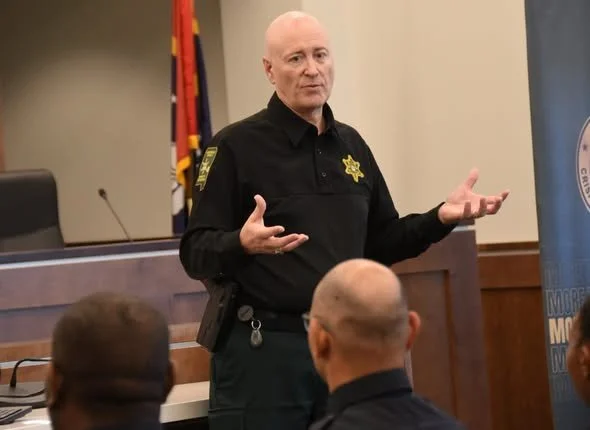
When East Mississippi residents have a mental health crisis, law enforcement with special crisis intervention training are called on to help deescalate the situation and connect them with the help they need.
The National Alliance on Mental Illness estimates more than 487,000 Mississippi adults are living with a serious mental illness, and 31,000 adolescents in the state have serious thoughts of suicide. At the same time, more than 2.2 million Mississippians live in communities with a shortage of mental health professionals.
Lauderdale County Sheriff’s Department’s Lt. Andy “Ski” Matuszewski, who serves as program manager for the East Central Mississippi Crisis Intervention Team, said a crisis looks different for everyone, but the goal remains the same—helping others.
Crisis intervention traces back to 1988 in Memphis, Tennessee when a young man in a mental health crisis was threatening people with a knife. The situation escalated until law enforcement shot and killed the man. A Black man shot by white police led some in the community to claim racism or police brutality, but it also led to serious discussions about responding to mental health situations.
Tasked with finding the solution was a Meridian native Sam Cochran, who was serving as a lieutenant in the Memphis Police Department at the time. Working with community partners to set up a task force, the resulting program is the foundation of crisis intervention training worldwide.
Lauderdale County Sheriff’s Department began looking at crisis intervention research around 2009 as a way to reduce the number of people held in the county jail due to mental health issues.
“Jail is not a place to get well if you’ve got an illness of whatever kind. We’re limited on treatments that we can apply and afford within the budget that we’re able to operate under,” Matuszewski said.
While the initial goal was to cut down on the number of people in jail, the crisis intervention team idea quickly grew into something more. Utilizing grant funding, the East Central Mississippi Crisis Intervention Team launched in 2012 and continues to train law enforcement throughout the state and beyond. Law enforcement trained in Meridian have gone on to build their own CIT programs in other areas of the state as well.
Crisis intervention is a community-based model, Matuszewski said, and the East Central Mississippi Crisis Intervention Team is a partnership with mental health organizations, hospitals, community support groups, law enforcement and others throughout the nine-county area the team serves. A steering committee made up of representatives from each group works to evaluate resources and identify and close gaps where those in crisis may fall through the cracks.
Crisis intervention training itself is not an easy course to take, and the officers and deputies who receive their certificates must prove they’ve learned enough to earn them. The 40-hour training includes blocks from community professionals, individuals with lived mental health crisis experience, role-play in which students must put their skills to the test and more.
Matuszewski said the training is intended to be difficult to prepare students for the responsibility that comes with being a CIT officer. Under normal circumstances, an officer must witness a crime take place or go to a judge with a sworn affidavit to get an arrest warrant before taking someone into custody. A certified CIT officer can interact with someone in a mental health crisis and determine they are a danger to themselves, others or unable to care for themselves, he said, and have them taken to a crisis center or other location for help.
“It’s a huge amount of responsibility. The certification allows an officer to compel an individual into an evaluation for their mental health or substance abuse, what the status is, without the action of a magistrate, which is the only time in our law that we’re allowed to do that,” he said.
Making sure students understand the weight of that responsibility, know the proper resources available and the process for connecting people with the help they need is a key part of what makes CIT training so intense.
“It’s probably one of the most packed weeks of instruction that most students will ever participate in because we put a ton of information,” he said. “We’re not trying to make clinicians out of cops, but they need to understand what they’re looking at so they can know which door to point these people towards.”
Recent changes to state legislation now require law enforcement agencies throughout the state have at least one officer certified in crisis intervention, and all law enforcement officers must have basic mental health first aid training.
The East Central Mississippi Crisis Intervention Team tries to hold three trainings per year in the spring, summer and fall, to give multiple opportunities for different law enforcement agencies to participate. Graduates of the program receive a CIT pin to wear on their uniform, and over time, individuals with mental health issues have come to recognize that pin as a sign that particular officer can be trusted to help.
Crisis intervention programs are now active in all 50 states and multiple foreign countries, Matuszewski said, and practices continue to grow and evolve. Resources change; people move offices and get new job titles. But every so often CIT officers hear from someone they helped and who overcame their crisis.
“One of those visits just makes all the difference in the world,” he said. “When you can make a difference for somebody, that’s what this is all about.”